

Muslim Leaders in Minnesota Voice Concern Over Heightened ICE Campaigns

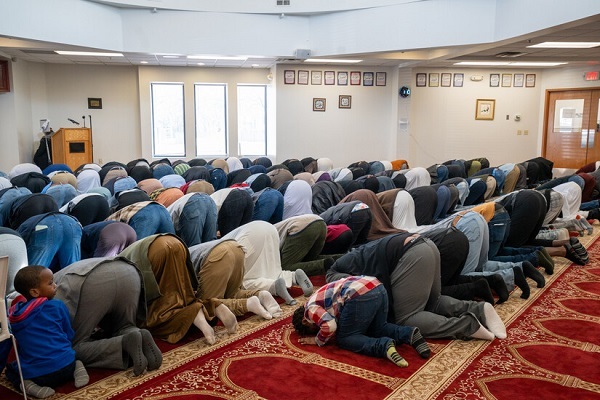
Unease was evident at a recent meeting held at the Zawadi Center in Bloomington. Around 70 imams and community members gathered to discuss reports of federal immigration officials targeting members of the Somali community across the state.
Yusuf Abdulle, executive director of the Islamic Association of North America, described the atmosphere as tense and emotional.
Speaking to Sahan Journal, he said many attendees spent the first part of the meeting sharing personal encounters with agents from US Immigration and Customs Enforcement, or ICE, following stepped-up enforcement that began in early December.
Abdulle said fear has affected daily life. Some Somali-owned businesses have reduced hours or closed temporarily because workers are afraid to travel. Others have stayed home entirely.
One parent told the meeting he had to intervene when agents approached his 17-year-old son near a school, explaining that the teenager was born in the United States.
Read More:
According to Abdulle, people who are US citizens and permanent residents have also been stopped and questioned about their origins. He said officers sometimes appear to focus on accents. He added that while undocumented people are fearful, the concern extends across the wider community.
Friday prayers continue at mosques across the Twin Cities. Imam Asad Zaman said attendance remains steady at Al-Rahman Mosque in Bloomington, where Somalis make up about one-third of worshippers.
Still, community organizations issued calls for citizen witnesses at mosques during the first week of enforcement, citing fear among congregants.
Abdulle said attendance has declined at Abubakr As-Saddique Mosque in south Minneapolis. He said roughly a quarter of worshippers were absent from a recent Friday prayer.
Zaman also described an incident in which a man and his children were briefly detained by federal agents while traveling to another mosque location.
Khalid Omar, a community organizer with the faith-based coalition ISAIAH, said some parents are worried about their children’s safety. He recounted one mother asking whether her children needed to carry passports or citizenship papers to school.
Munir Maalim, a 26-year-old worshipper, said the situation has revived painful memories for some elders who fled Somalia’s civil war.
Speaking to Sahan Journal, he said President Donald Trump’s rhetoric has intensified fear among those who experienced conflict and displacement.
Read More:
Minnesota’s Somali population, estimated at about 80,000, includes many US citizens. Even so, Abdulle said mosques are increasing security by installing cameras, hiring private guards, and coordinating with local police.
Neighbors have also shown support by watching over mosque grounds and bringing food.
Some worshippers expressed less concern. University of Minnesota student Hamza Ahmed said after prayers at Dar Al-Hijrah Mosque that most Somalis in the area are citizens.
Another worshipper, Falmata Elemo, said attendance remains strong but acknowledged growing tension due to reports of agents seen on campus and in nearby suburbs.
Mohamed Mohamud, a US citizen who immigrated as a child, said he is not personally worried but is troubled by online hostility toward Somalis, often linked to high-profile fraud cases involving a small number of individuals.
Two weeks ago, faith leaders from multiple religions and elected officials gathered at Al-Rahman Mosque to condemn anti-Somali rhetoric and express solidarity. Imam Zaman urged calm, saying, without alteration, “We are greater than fear.”
Source: Agencies
