

When A Russian Poet Became Fascinated with Quran

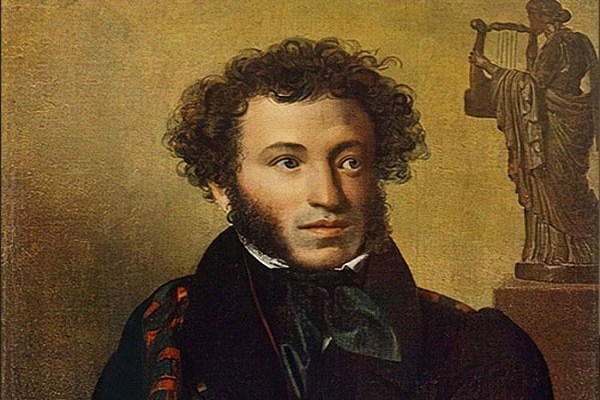
This is clearly evident in the works of the famous Russian poet Alexander Pushkin, who was culturally, artistically and spiritually influenced by the Arab East, according to a report by Rasif website.
Pushkin's best works were created based on the Quran
In his book titled “Arabic and Islamic Influences in Russian Literature”, Makarem Al-Ghamri points out that Alexander Pushkin (1799-1873 AD) is at the forefront of Russian poets who were inspired by the Quran and the life of the Holy Prophet (PBUH). His poem titled “A Glimpse of the Quran”, written in 1824, holds an important place among Russian literary works that are inspired by the spiritual and Islamic heritage and the life of the Prophet (PBUH
These poems are clear proof of the ability of Quranic values to transcend the horizons of time and space and to penetrate the souls of people who do not believe in the greatness of the Quran.
Spiritual Influence of Holy Quran on Pushkin
These poems reflect the important role that the Quran played in Pushkin’s spiritual development. Al-Ghamri quotes Russian critic Chernyaev in his book “Pushkin’s Messenger in His Work: A Glimpse of the Quran”, saying, “The Quran gave the first impetus to Pushkin’s religious awakening and was of great importance in his inner life. Moreover, the Quran was the first religious book that captured the imagination of the poet Pushkin and led him towards the religion of Islam.”
“A Glimpse of the Quran” consists of nine untitled odes, listed in numerical order. According to Al-Ghamri, in the first ode, Pushkin was inspired by Surahs that deal with aspects of the life of the Prophet Muhammad (PBUH), which were of particular interest to the Russian poet.
Pushkin Inspired by Surah Ad-Duha
The verses of “A Glimpse into the Quran” vary in length and meter, and correspond to the Quranic verses from which Pushkin adapted and based his poems. Ne'mat Abdul Aziz Taha, in his article “The Influence of Islam on Russian Literature... Alexander Pushkin, Mikhail Lermontov, Leo Tolstoy and Ivan Bunin”, says: “In part of the first ode, he imitates the Quranic oath in several verses, such as ‘The Oath by the Star’”.
Abdul Aziz Taha has noted that Pushkin was inspired by Surah Ad-Duha, especially by the themes of the Prophet’s distress when the revelation was interrupted for a while, an interruption that was unprecedented in its duration. In Verses 1 to 3 of this Surah, Allah Almighty says: “By the midmorning, and by the night when it covers, your Lord has not forsaken you (Prophet Muhammad), nor does He hate you.”
Muhammad al-Sabuni in his book “Safwat al-Tafsir” provides an interpretation of these three verses in accordance with the interpretation of the early commentators, in which Allah Almighty swears by the time of Dhuha, which is the beginning of the day and from which the sun rises, and by the night when its darkness increases and encompasses everything.
According to Ibn Kathir’s interpretation, this is an oath from Allah, by the morning and the light He has placed in it, and by the night when it becomes silent and dark, and this is a proof of His power. But "Your Lord has not forsaken you, nor does He hate you,” meaning, O Muhammad, your Lord has not forsaken you, since He chose you, and He loves you. This is a response to the polytheists when they said, ‘His Lord has forsaken him’.
According to Taha, Pushkin repeats this concept in part of the first ode.
Pushkin reaches the end of the ode to a passage referring to Verses 6-9 of Surah Ad-Dhaha.
Read More:
The verses of Surah Ad-Duha clearly show the influence of the Quran on Pushkin and his familiarity with its stories.
Pushkin continues with his adaptations from the Holy Quran and in the middle of the poem he refers to the story of the Prophet’s (PBUH departure from Mecca to Medina, which is mentioned in Verse 40 of Surah At-Tawbah.
Recreating Quranic Values in Poetry
According to Al-Ghamri in his book mentioned earlier, the book “A Glimpse into the Quran” is a combination of thematic and intrinsic poems. This work is not an imitation in the direct sense of the word. The Quranic values that find thematic existence in these poems are reflected through the intrinsic aspect of the artist in his artistic signature, his distinctive poetic style, his artistic approach and views.
In other words, when Pushkin quotes the Quranic “moral value”, he extracts it from the Quranic text in order to re-incarnate it through his inner “self” and through his artistic elements.
In his poems, Pushkin does not adhere to the sequence of “moral concepts” found in the Quran. Rather, he may combine the meanings of different Surahs in a single ode, as he did in the first ode. According to Al-Ghamri, these meanings are the combination of poetic imagery with the metaphorical meaning that the poet intends and wants to convey to the readers.
If Pushkin were not familiar with the French and Russian translations of the Holy Quran and its interpretations, he could not have imitated these verses in his poems, because the lessons and stories of the prophets in the Quran influenced Pushkin’s philosophical and doctrinal discourse, as Nazim Majid Al-Dirawi points out in his article entitled “Translating the Meanings of the Quran into Russian and Its Influence on Pushkin and His Contemporaries”.
According to Al-Dirawi, Pushkin carefully studied two translations of the Holy Quran, one in Russian by Mikhail Virovkin and the other in French by André de Royer. He may also have been familiar with the poems of the German writer Johann Goethe's “Divan-e-Sharqi”, which surpassed Russian writers in its quotations from the Holy Quran, Arabic odes and odes by Muslim poets and Sufi poems, as well as the stories of “One Thousand and One Nights” and what had been translated from German from works related to the biography of Prophet Muhammad (PBUH) and the religion of Islam.
From Virovkin’s translation, Pushkin quoted verses from Surahs Al-Baqarah, Al-Kahf, Maryam, Taha, Hajj, Al-Nur, Al-Ahzab, Muhammad, Fath, Al-Qiyamat, At-Takwir, Fajr, Balad and Al-Dhuha, and borrowed stories, purposeful sermons and wise lessons.
Malik Suqour, in his study entitled “Pushkin and the Quran”, notes that Pushkin first read the Quran while he was in exile in the village of Mikhailovsky.
Read More:
Pushkin did not stop at reading the Quran, but when he was in southern Russia and on his trip to the Erzurum region, he also listened to the Quran being recited.
Pushkin also read the biography of Prophet Muhammad (PBUH) and tried to learn everything about him, and he admired his character very much. During his stay in the city of Chisinau, he had a Greek friend who was fluent in Italian and French and spoke Arabic well. According to Suqour, Arabic letters and their explanations have been found in Pushkin's manuscripts, which confirms that Pushkin tried to learn Arabic from his friend.
4322499
